Usizo Lwethu Afrisun Clinic
Durban’s poorest of the poor and their children deserve access to quality primary healthcare, regardless of who they are and where they are from, and especially those who are most marginalised.
Central Durban has also become a magnet for the homeless destitute, who try to eke out a living through begging, sex work or other means of survival. Many live in parks, alleys and shelters; many have mental health problems or are substance abusers.
People from marginalised groups often have complex socioeconomic and psychosocial problems. These include addiction complications, stigma, food insecurity, fragile accommodation, voicelessness, police harassment, and lack of access to ablutions. These problems make the management of serious and widespread chronic conditions such as TB, substance abuse and HIV particularly challenging. Over 25% of the people we test are HIV+.
Many people fall through the gaps in conventional health systems.
Our clinic is called Usizo Lwethu. This means ‘our help’ in isiZulu.
Usizo Lwethu is based at the Denis Hurley Centre and also provides outreach services off-site.
History
Clinic Beginnings
The clinic was established in 2006 as a community and parish-based response to the healthcare needs of the poor in the area. It began as an initiative of the Catholic Archdiocese of Durban AIDS Commission.
Initially we offered voluntary counselling and testing services, uniquely offering counselling in widely spoken East and Central African languages. It soon became clear that a great need existed for accessible primary health care for marginalised groups.
Serving the Vulnerable
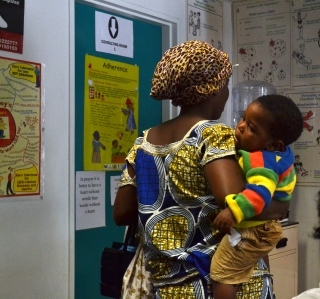
The outbreak of xenophobic violence in Durban in April 2015 created a sense of insecurity amongst refugee communities. Refugees and homeless people still often report negative attitudes from state health facilities; refugees also experience language difficulties. Currently, refugees constitute almost half of the people using the services offered.
The DHC Usizo Lwethu clinic is now a fully-fledged Primary Health Care Clinic and part of the Denis Hurley Centre.
Clinic Services
No person is denied admission to any of the services regardless of age, gender, race, national origin or religion. All are welcome. All services are provided free of charge.
Our main services include:
Children Placed
$ Raised
Homes Built
Testing and pre-test and post-test counselling
Pre-test counselling, testing and post-test counselling and CD4 tests (the strongest indicator of HIV progression)
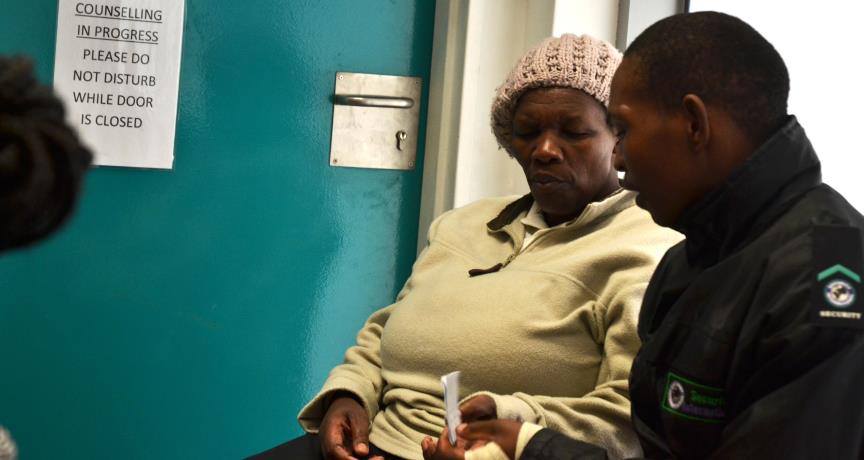
Comprehensive patient-centred primary health care
- Voluntary counselling and testing
- Integrated management of child, adolescent, adult and geriatric Illnesses
- Management of communicable diseases
- HIV/AIDS screening, CD4 monitoring and referral for ART initiation, management of opportunistic Infections
- Clinical diagnosis of TB, referral for treatment and then monitoring of treatment
- Management of Sexually Transmitted Infections
- Men’s Clinic one Saturday per month, providing men’s preventive and promotive healthcare
- Support and care of patients using ‘whoonga’ (heroin-based drug).
Advocacy and Community Mobilization
Changing Perceptions, Empowering Voices
Our overall aim is to encourage Durbanites to see the homeless, the refugees and the drug users not as problems to be solved but as fellow-citizens.
We have responded to frequent reports from homeless people of violence and abuse at the hands of police and security personnel, by initiating a dialogue between Durban Police management and representatives of the homeless community, to ensure that:
- Communities in inner city Durban are involved in the design, implementation, monitoring and evaluation of their care and support activities.
- Inner city communities will no longer be voiceless and powerless e.g. during police raids possessions such as medical records, identification documents and medications can be confiscated or destroyed.
Policy Advocacy and Public Awareness
We continue to work with the homeless and with the Human Sciences Research Council to lobby for better policies and amenities within the inner city, such as a revamp of unoccupied city-centre buildings to provide accommodation together with a strong public works programme to provide employment for homeless and destitute people.
We are a voice of advocacy for the homeless. Ironically, this was even more true during the recent Global AIDS conference in Durban (July 2016) when in an attempt to ‘clean the streets’ for the conference, the Municipality put at risk the lives of homeless people in the city living with AIDS. As a result of community networking, this was covered extensively on TV news and on their website by ‘Al Jazeera’ in two separate reports: Homeless people removed from Durban and Homeless HIV patient removed for Durban Aids Summit
Clinic Outreach
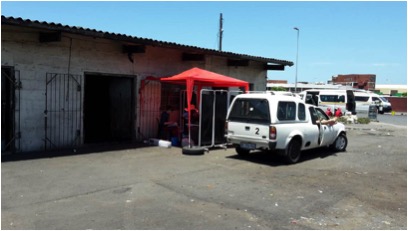
Currently we reach out to the community on their own territory using a Mercedes Benz Sprinter which has been converted into a mobile clinic (generously funded by the Embassy of Japan) and an old Ford Bantam ‘bakkie’ (van/ pick-up), a gazebo and camping tables. For many of our patients this is their only access to healthcare.
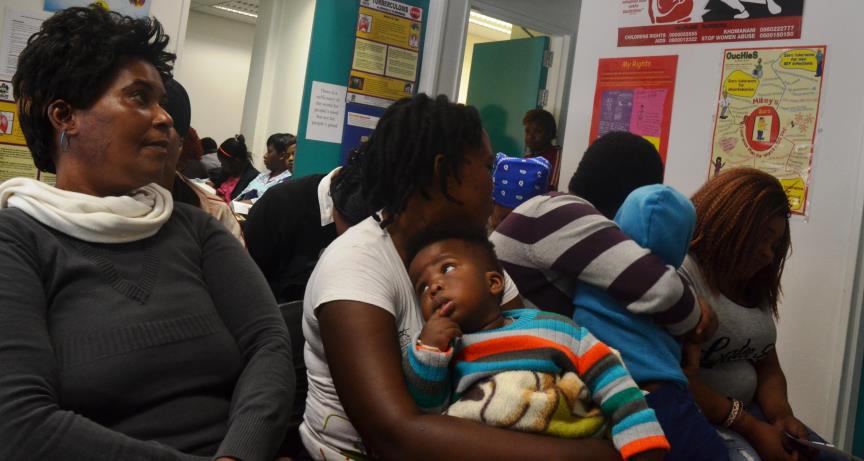
Homeless people are less likely to visit Government clinics for fear of discrimination from staff or other patients. However, a good number come to the clinic at the Denis Hurley Centre because they know they will be welcome, they will be fed and they can take a shower. Around 200-300 of the 2,000 people who attend the clinic each month are living rough.
But there are still many who are not well enough, or do not feel confident even to come to our clinic. For that reason, we also have an outreach programme which visits areas of the city where there are high concentrations of homeless people.
Areas that we target are along Point Road, around Addington Hospital, Mansel Road and Greyville Racecourse. A key focus has been people who are living in and around the Dalton Beer Hall at the corner of Sydney and Dalton Roads.
In an average month we see about 500 people.
The services we provide for homeless people on the streets include:
- Voluntary counselling and testing for HIV
- Directly Observed Treatment for TB (tubercullosis) and ARVs (Antiretrovirals)
- Providing and supervising prescribed medication
- Facilitating family counselling when possible, especially for whoonga (heroin based drug – smoked or injected) users
- Referring patients to clinic or in-patient respite unit (Hillcrest Aids Centre) or hospitals
- Establishing relationship with drug users and helping to facilitate their rehabilitation
- Follow up of patients who have defaulted treatment (ARVs and TB)
- Awareness raising and education with community members to reduce stigma of people living with HIV
- Assisting those who are eligible for grants (families, disabled, older people)
- Identifying, supporting and referring vulnerable children
- Providing transport for patients and families to the clinic, hospitals, Welfare / Home Affair Offices and the Hillcrest Aids Centre in-patient Respite Units
- Assisting with funerals
Outreach in Dalton
Dalton Clinic
A Dream Realised
August 2017 update
We are very pleased and proud that we finally have a proper clinic! The dream has finally been realised thanks to Container World, Umbilo Business Forum, Lead Architects, We Are Durban and UKZN medical students, the Municipality – and the South Durban Area Management team.
There was such joy from the hundreds of local residents, partners, donors, staff and volunteers when Cardinal Napier blessed the container clinic recently.
The next challenge is to boost funding so the Dalton clinic can be open every day.
Our aim is to install a semi-permanent facility on the site by converting a container into a transportable clinic
- Container World, a local corporate, has donated the container and undertaken to cover the costs of conversion.
- Staffing a daily service here would be possible working in partnership with the nearby UKZN School of Medicine.
We are awaiting a co-operation agreement with the Municipality who own the site and whose help we need to connect to power, water and sanitation.
Taking Healthcare Further
The outreach work of the clinic means that each month we see a further 400 patients in the community in addition to the 2,000 we see in the clinic. A simple bakkie and tables set up under a gazebo is currently our only way of providing street-side healthcare for the homeless.
We provide the only source of healthcare accessed by many of the local people, including those with TB and HIV.
Our aim is to install a semi-permanent facility on the site by converting a container into a transportable clinic
- Container World, a local corporate, has donated the container and undertaken to cover the costs of conversion.
- Staffing a daily service here would be possible working in partnership with the nearby UKZN School of Medicine.
We are awaiting a co-operation agreement with the Municipality who own the site and whose help we need to connect to power, water and sanitation.
Dalton Playgroup
Children at Risk
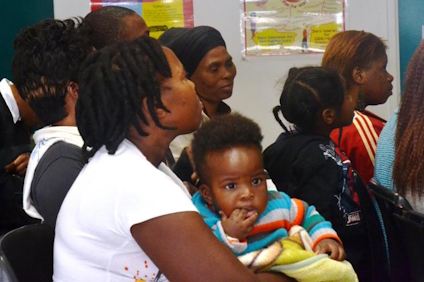
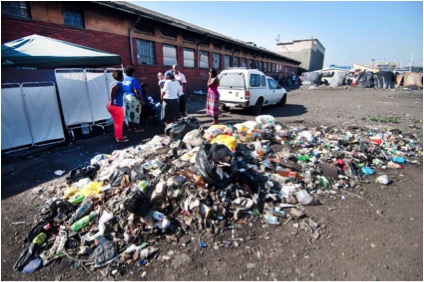
Although most Dalton residents are single men, there is a surprising number of women and young children. Children live in shacks and derelict buildings; they play in the rubble, glass, stagnant water and on the pavements of busy main roads. Some are malnourished and many suffer from respiratory tract infections.
Creating Safe Spaces
As a result, our priority became to establish a safe and stimulating play group, where food and health care is provided for the pre-school children. After meeting and consulting with mothers, gogos (grandmothers) and other carers, a play group was established in Dalton at the beginning of October 2015 in a rented room opposite the Dalton Beer Hall. Play group equipment and toys have been donated through churches and individuals.
Nurturing Young Lives
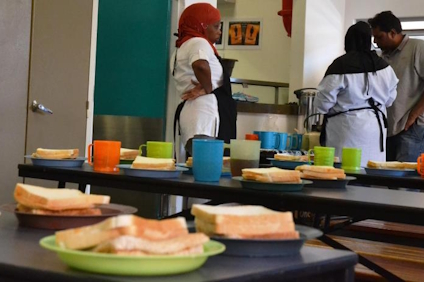
Food is provided through the clinic and the feeding programme at the Denis Hurley Centre and a qualified early childhood development teacher is being sponsored to run the playgroup three mornings a week. We welcome between 15 and 25 children to the playgroup.
Clinic Staff
Updated June 2021
The core clinic staff comprises:
- One primary health care trained, registered nurse who is also Clinic Co-ordinator
- One experienced, retired registered nurse
- One retired registered nurse who work part-time as needed
- One social worker (focusing on a Directly Observed Treatment programme)
- Four community health care workers, also trained as VCT counsellors
- Two foreign language interpreters, also trained as VCT counsellors
- One driver for outreach work
Volunteers supplement our core staff by about 50%.
- We regularly have a volunteer doctor 2 days a week.
- We have also had help from UK doctors, Harvard Medical School interns, a doctor from Cameroon, a nurse, a health educator from the Islamic Medical Association and a pharmacist.
- Are you interested in volunteering in Durban? Click here to find out more.
Clinic Economics
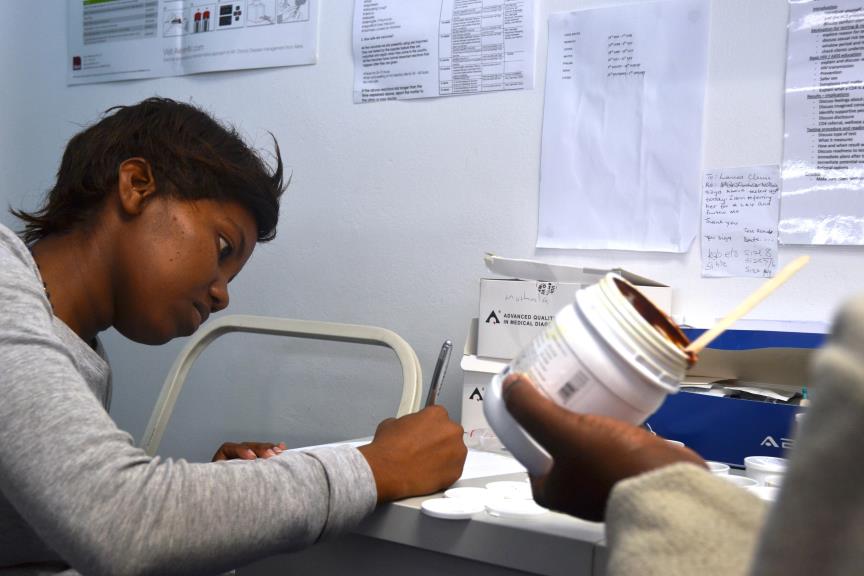
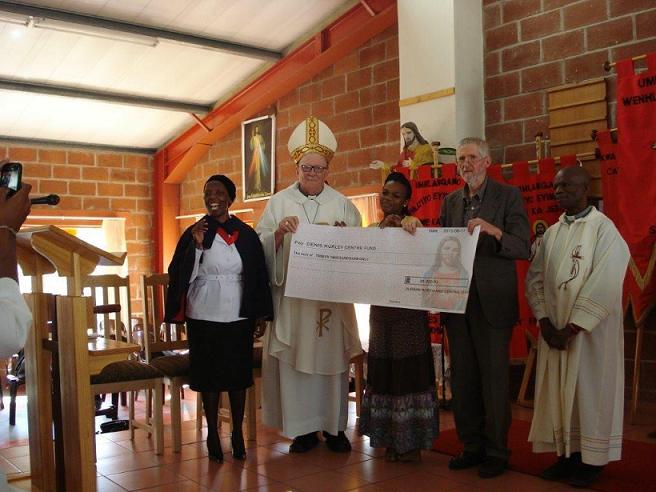
We have a diverse spread of funders – individuals, community groups and donor organizations; South African and overseas. We have also had significant funding from some prestigious donor organisations – Oxfam Australia, Irish Aid, PEPFAR, Victor Daitz Foundation.
We are an extremely cost-effective operation benefiting from experienced staff who are willing to work for considerably less than they would earn elsewhere; from regular volunteers who supplement our staff contingent; and from efficient management of medicines and other resources. Our full-absorbed costs – covering salaries, medicines, rent, utilities, and training – is less than R60 or $4 per consultation.
Find out how you can help make the work of DHC, including the clinic, sustainable.
Clinic Friends and Partners
Working Together
Usizo Lwethu Clinic works collaboratively with the other social outreach projects within the Denis Hurley Centre:
- Refugee Pastoral Care (language classes, school registration, help with documentation, emergency relief)
- Nkosinathi Project (feeding, showering, clothing, counselling, preparation for drug rehabilitation),
- Economic Empowerment (Street Booksellers, sewing skills, computer training, environmental car washing, urban farming, SendMe)
Partner Organisations
- Qalakabusha Project and the Safer Cities Department of eThekwini Municipality
- Newlands Park Rehabilitation Centre
- Early Childhood Development – TREE, NELRU
- iCare (specialist organisation working with street children)
- SANZAF (Muslim Development agency)
- RAUF (Muslim anti-drugs community group)
- Islamic Medical Association
- Careline in Assagay
- Bright Site Project (UNISA 4th year social workers)
- The Wellness Centre Trust (assistance for homeless on the beachfront)
- The Nest (an inner city shelter)
- The Hillcrest Aids Centre Respite Unit (admits referred patients)
- District Health and Welfare Services (receive VCT Kits through District Health)
- FAMSA (family services)
- SANCA (drug rehabilitation and education)
- DUT – Urban Futures Centre (a partner in an Opiate Substitute Treatment demonstration)
- Departments of Social Services
- Government clinics and hospitals
- Department of Health and eThekwini Municipality Health
Get in Touch. Get Involved.
Vivamus suscipit tortor eget felis porttitor volutpat. Nulla quis lorem ut libero malesuada feugiat. Vivamus suscipit tortor eget felis porttitor volutpat. Proin eget tortor risus.